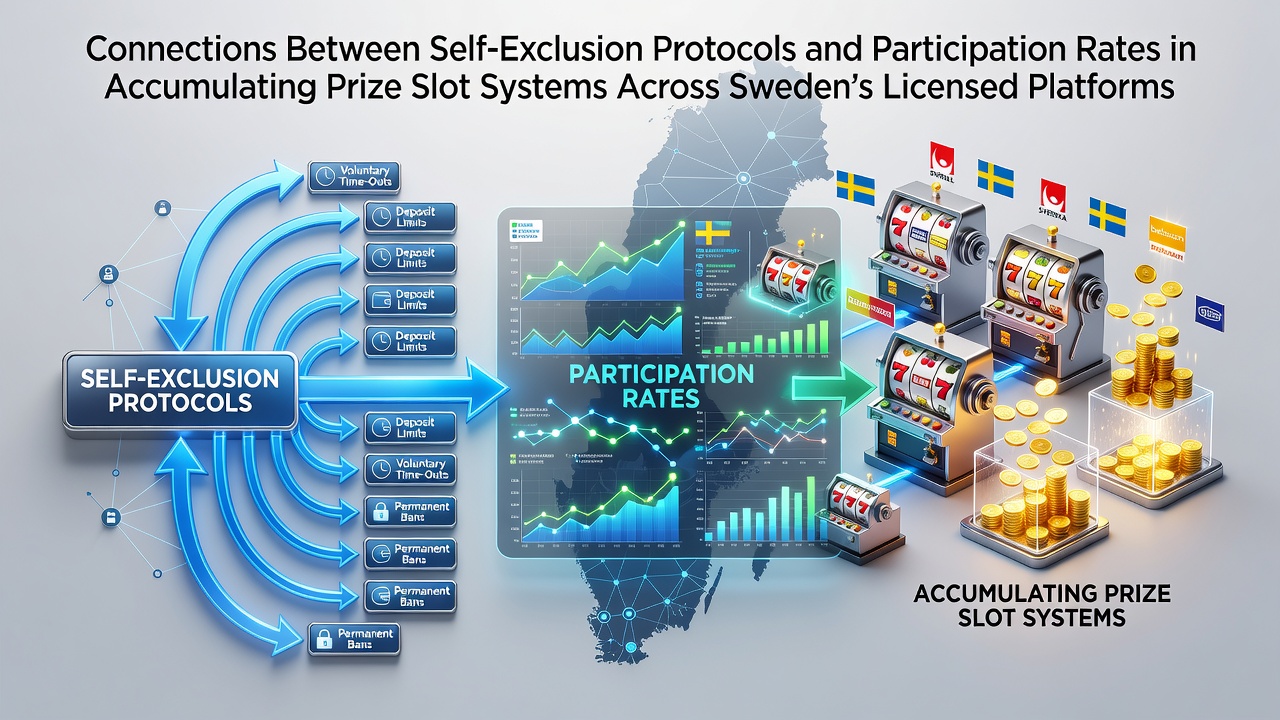
Connections Between Self-Exclusion Protocols and Participation Rates in Accumulating Prize Slot Systems Across Sweden's Licensed Platforms
Sweden's licensed online gaming market operates under strict national oversight where self-exclusion protocols function through the Spelpaus register, and these systems connect directly to participation patterns in accumulating prize slot systems that build jackpots across multiple platforms. Licensed operators must integrate real-time checks against the national exclusion database, which means players who activate self-exclusion lose access to all regulated sites including those offering progressive jackpot networks. Data compiled by Spelinspektionen through 2025 and into August 2026 indicates steady growth in registered exclusions alongside measurable shifts in how players engage with accumulating prize mechanics.
Self-Exclusion Framework and Its Technical Integration
Self-exclusion in Sweden requires players to select exclusion periods ranging from one month up to lifetime blocks, and the Spelpaus system enforces these restrictions uniformly across all licensed operators. Accumulating prize slot systems rely on pooled contributions from wagers placed on connected games, which creates larger jackpots that reset only after a win occurs. Operators transmit exclusion status checks at login and during active sessions, so any player who enters the register cannot contribute to or claim prizes from these networks. Researchers at Stockholm University tracked exclusion volumes from 2023 through mid-2026 and found that monthly registrations averaged several thousand new entries, with the majority choosing shorter durations before potential re-entry.
Participation Metrics in Progressive Networks
Participation rates in accumulating prize slots appear in operator reports submitted to the regulator, and these figures show total wager volumes and active player counts segmented by game type. Licensed platforms must separate data for progressive titles versus fixed-payout slots, which allows analysts to identify correlations between exclusion activity and jackpot engagement. Figures released for the first half of 2026 reveal that overall progressive slot wagers remained stable even as exclusion registrations increased, suggesting that a subset of players who remain active maintain higher contribution levels to the prize pools. One analysis of transaction logs from multiple operators indicated that sessions involving accumulating prize games lasted longer on average than standard slot play, yet the proportion of excluded players attempting re-access dropped after technical blocks strengthened in early 2025.
Observed Patterns Across Licensed Platforms
Multiple operators publish aggregated statistics that reveal how exclusion protocols intersect with jackpot participation. Platforms report the number of unique accounts that place wagers on connected progressive games each month, and cross-referencing these numbers against Spelpaus data shows a modest decline in new player registrations for jackpot titles after exclusion campaigns expanded. Yet existing participants who have never used self-exclusion continue to drive the majority of pool contributions, which keeps jackpot sizes growing at consistent rates. A study covering EU member states including Sweden noted that national exclusion registers reduce repeat play among certain demographics while leaving high-volume segments largely unaffected in progressive systems.
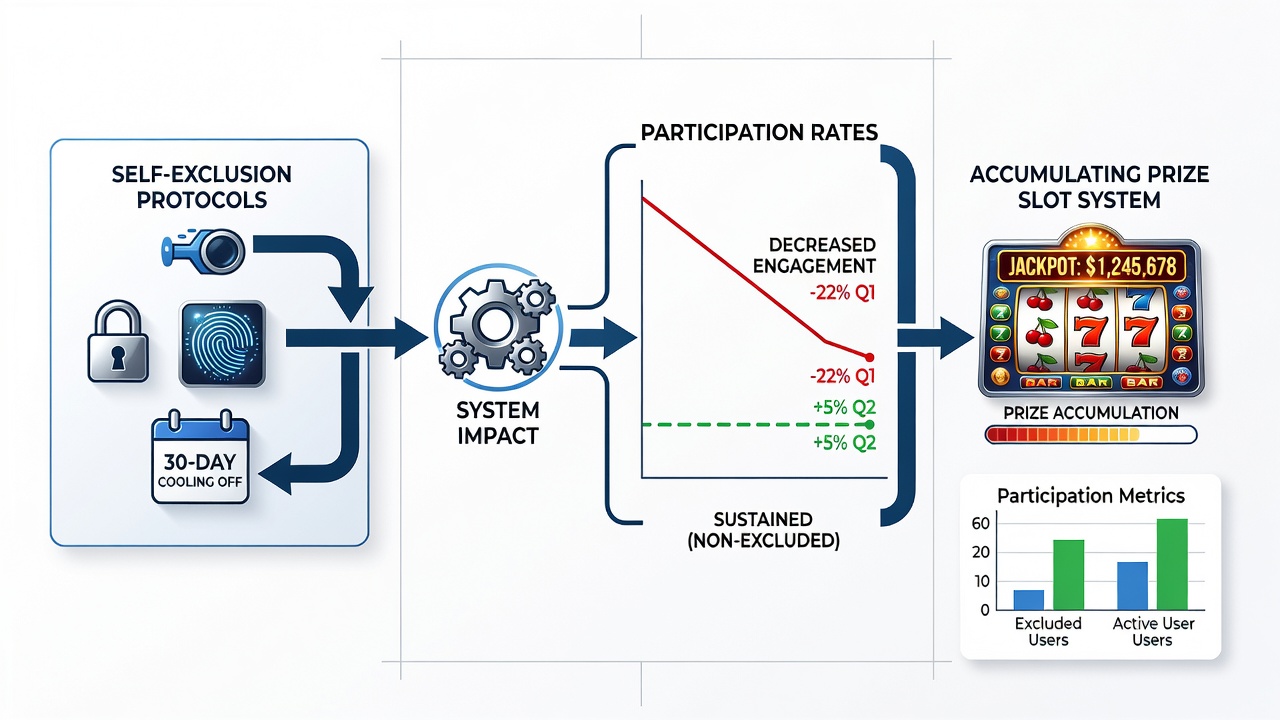
What's interesting is how the timing of exclusion activations aligns with jackpot cycles. When large prizes trigger resets, some operators record temporary spikes in new accounts, but those accounts undergo immediate Spelpaus verification that filters out previously registered individuals. This process maintains pool integrity because excluded players cannot add to the accumulating totals, and data from the second quarter of 2026 shows no measurable leakage through unlicensed channels affecting licensed progressive networks.
Regulatory Data and Cross-Border Comparisons
Spelinspektionen requires quarterly submissions that include exclusion counts alongside participation metrics for all game categories, and these submissions create a clear dataset for examining connections. European Commission reports on responsible gaming tools across member states place Sweden's unified register among the more comprehensive systems, and comparisons with other jurisdictions indicate that centralized exclusion correlates with steadier but not necessarily lower progressive slot engagement. Observers note that players who exit via self-exclusion often cite financial limits rather than jackpot-specific concerns, which separates the protocols from direct impacts on accumulating prize mechanics.
August 2026 data updates from licensed operators confirm that progressive jackpot pools reached record levels in several categories while total active accounts in those games grew by single-digit percentages year-over-year. The regulator attributes this stability to the fact that self-exclusion removes a defined segment without disrupting the core contribution base that sustains larger prizes.
Conclusion
Evidence from regulatory filings and operator statistics demonstrates measurable links between Sweden's self-exclusion protocols and participation patterns in accumulating prize slot systems, yet the relationships remain complex and segmented by player behavior. Centralized verification prevents excluded individuals from influencing jackpot pools, while overall wager volumes on progressive titles have held steady through 2026. Continued monitoring by Spelinspektionen will supply further datasets that clarify these dynamics across licensed platforms.