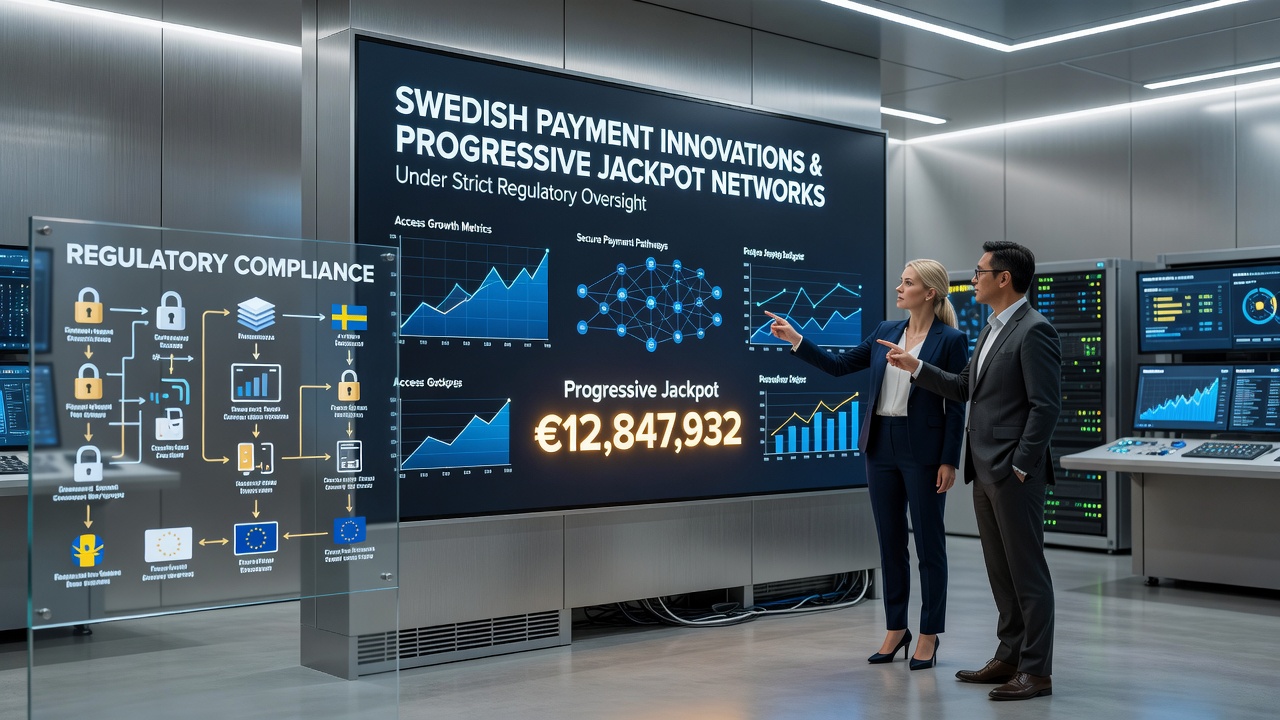
How Swedish Payment Innovations Shape Access to Progressive Jackpot Networks Under Strict Regulatory Oversight
Swedish payment innovations have integrated deeply with progressive jackpot networks in the online gaming sector, and these developments occur under the close supervision of national authorities that enforce compliance at every stage. Operators must align their systems with rules set by Spelinspektionen, the body responsible for licensing and monitoring all gambling activities within the country, which means payment methods such as instant bank transfers and digital wallets directly influence how players join shared jackpot pools across multiple games and platforms.
Regulatory Framework Governing Payment Integration
Sweden introduced its re-regulated gambling market in 2019, and since then payment solutions have faced layered requirements that prioritize security, speed, and traceability while limiting exposure to unlicensed operators. Data from regulatory filings shows that licensed platforms must use payment providers approved for real-time verification, which in turn determines eligibility for participation in progressive jackpot networks that aggregate contributions from players in Sweden and sometimes across borders. Those networks rely on synchronized contributions, so any delay or restriction in fund movement can reduce access or alter prize accumulation rates.
Payment innovations like Swish and Trustly have become standard because they meet the technical standards for instant deposits and withdrawals while supporting the mandatory player identification processes required by law. According to information published by Spelinspektionen, these methods allow operators to confirm funds originate from verified accounts, a step that prevents unauthorized entries into jackpot systems and maintains the integrity of prize pools.
Technical Mechanisms Linking Payments to Jackpot Participation
Progressive jackpot networks function through centralized servers that collect a percentage of each wager from connected games, and Swedish operators must route player transactions through channels that feed directly into these systems without intermediate holds. Innovations in open banking have enabled seamless API connections between banks and gaming platforms, which means a deposit processed via approved Swedish payment rails updates the jackpot meter in real time. This direct linkage ensures that contributions from Swedish players register accurately, even when the network spans multiple jurisdictions.
Researchers tracking transaction patterns note that platforms using older batch-processing methods encounter higher rejection rates during peak periods, whereas those adopting newer instant solutions maintain consistent participation levels. In August 2026, updates to interoperability standards are scheduled to take effect, requiring all licensed operators to demonstrate enhanced encryption protocols when linking payment gateways to jackpot servers, a measure designed to further secure data flows across the network.

Impact on Player Access and Network Scalability
Strict oversight extends to how payment providers handle cross-border elements within jackpot networks, since many progressive systems draw from international player bases yet must isolate Swedish transactions for tax and reporting purposes. Payment innovations that embed geolocation and account verification at the transaction level allow operators to comply without blocking legitimate access, while non-compliant methods face exclusion from licensed platforms. Figures released by industry associations indicate that adoption of these advanced payment tools has correlated with steadier growth in jackpot participation rates among Swedish users compared to markets with slower payment modernization.
One documented case involves a major operator that transitioned its deposit infrastructure to an open-banking solution in 2024, resulting in measurable increases in the frequency of jackpot contributions from its Swedish customer base. This shift occurred because the new system satisfied Spelinspektionen requirements for audit trails and real-time reporting, allowing uninterrupted connection to the broader network. Observers note that similar transitions across the sector have helped maintain network stability even as player volumes fluctuate seasonally.
Future Developments and Compliance Challenges
Emerging payment technologies, including those built on distributed ledger principles, are undergoing evaluation by Swedish regulators to determine their suitability for jackpot environments. These innovations promise faster settlement and enhanced transparency, yet they must first demonstrate compatibility with existing oversight mechanisms that track every contribution to shared prize pools. Reports from European gaming bodies highlight that countries with advanced payment ecosystems tend to experience smoother integration of new jackpot features, whereas slower adopters face temporary restrictions on network participation.
By August 2026, additional guidelines on digital currency usage in gambling transactions are expected to clarify boundaries for progressive systems, potentially expanding or narrowing the range of accepted payment rails depending on risk assessments. Operators that prepare their infrastructure ahead of these changes position themselves to sustain access without disruption, while those that lag may encounter temporary suspension from certain networks until compliance is verified.
Conclusion
Swedish payment innovations continue to define the parameters of access to progressive jackpot networks through a combination of technological capability and regulatory alignment. The requirement for verified, instantaneous transactions ensures that contributions remain traceable and that networks operate within the legal framework established by national authorities. As standards evolve toward August 2026 and beyond, the interplay between payment systems and jackpot infrastructure will likely determine which operators maintain full connectivity and which face limitations based on compliance performance.